The evolution of CX in a connected world.
Evaluating digital transformation and multichannel synergy in a mobile-first retail landscape.
Industry: Retail
Year: 2024
Brand: John Lewis
↓
Industry: Retail
Year: 2024
Brand: John Lewis
↓
Industry: Retail
↓
The story.
The story.
How does a 160-year-old retail giant stay relevant when the world stops shopping in person and starts shopping on smartphones?
Since 1864, John Lewis has been defined by the physical "middle-class cathedrals" of its department stores. Its unique employee-ownership model built a culture of dedication, but the pandemic forced a pivot.
Almost overnight, the brand had to switch to a digital-only model.
In 2019, they signed a £100 million deal with Google Cloud to reinvent the online experience, a move made critical as 68% of visitors now access the brand via mobile.
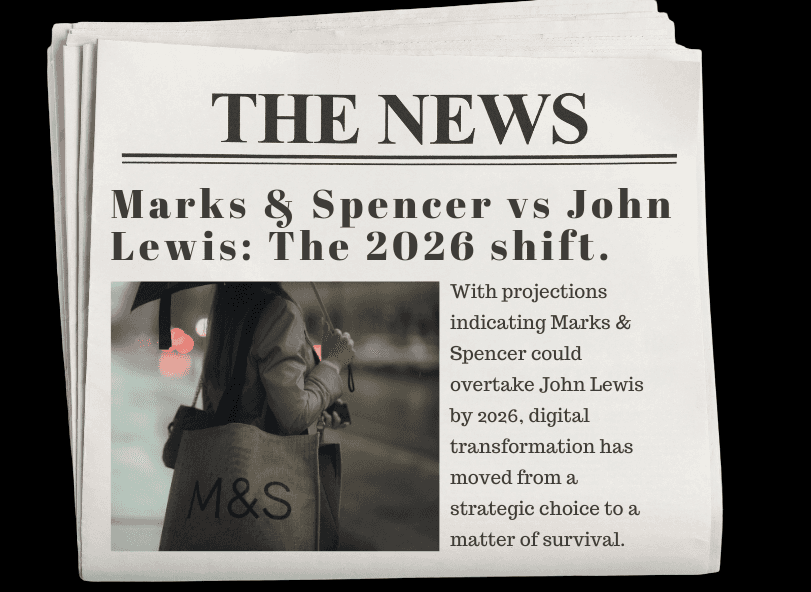
As market data suggests that Marks & Spencer could overtake them by 2026, the urgency to evolve was a matter of survival.
This competitive pressure served as the catalyst for my deep dive into their digital ecosystem to see if they were truly evolving or just trying to keep up.
How does a 160-year-old retail giant stay relevant when the world stops shopping in person and starts shopping on smartphones?
Since 1864, John Lewis has been defined by the physical "middle-class cathedrals" of its department stores. Its unique employee-ownership model built a culture of dedication, but the pandemic forced a pivot.
Almost overnight, the brand had to switch to a digital-only model.
In 2019, they signed a £100 million deal with Google Cloud to reinvent the online experience, a move made critical as 68% of visitors now access the brand via mobile.
As market data suggests that Marks & Spencer could overtake them by 2026, the urgency to evolve was a matter of survival.
This competitive pressure served as the catalyst for my deep dive into their digital ecosystem to see if they were truly evolving or just trying to keep up.
The question.
The question.
Like every project, this one required a direction.
I moved past surface observations to address the core of my research: critically examining the brand's current effectiveness while identifying how digital transformation can secure future success.
My mission was defined by these 3 questions:
How does John Lewis use multiple channels to attract and retain the modern, budget-conscious consumer?
In what ways can digital technology increase brand intimacy and long-term loyalty?
Is their current digital ecosystem supporting growth, or is it falling behind competitors?
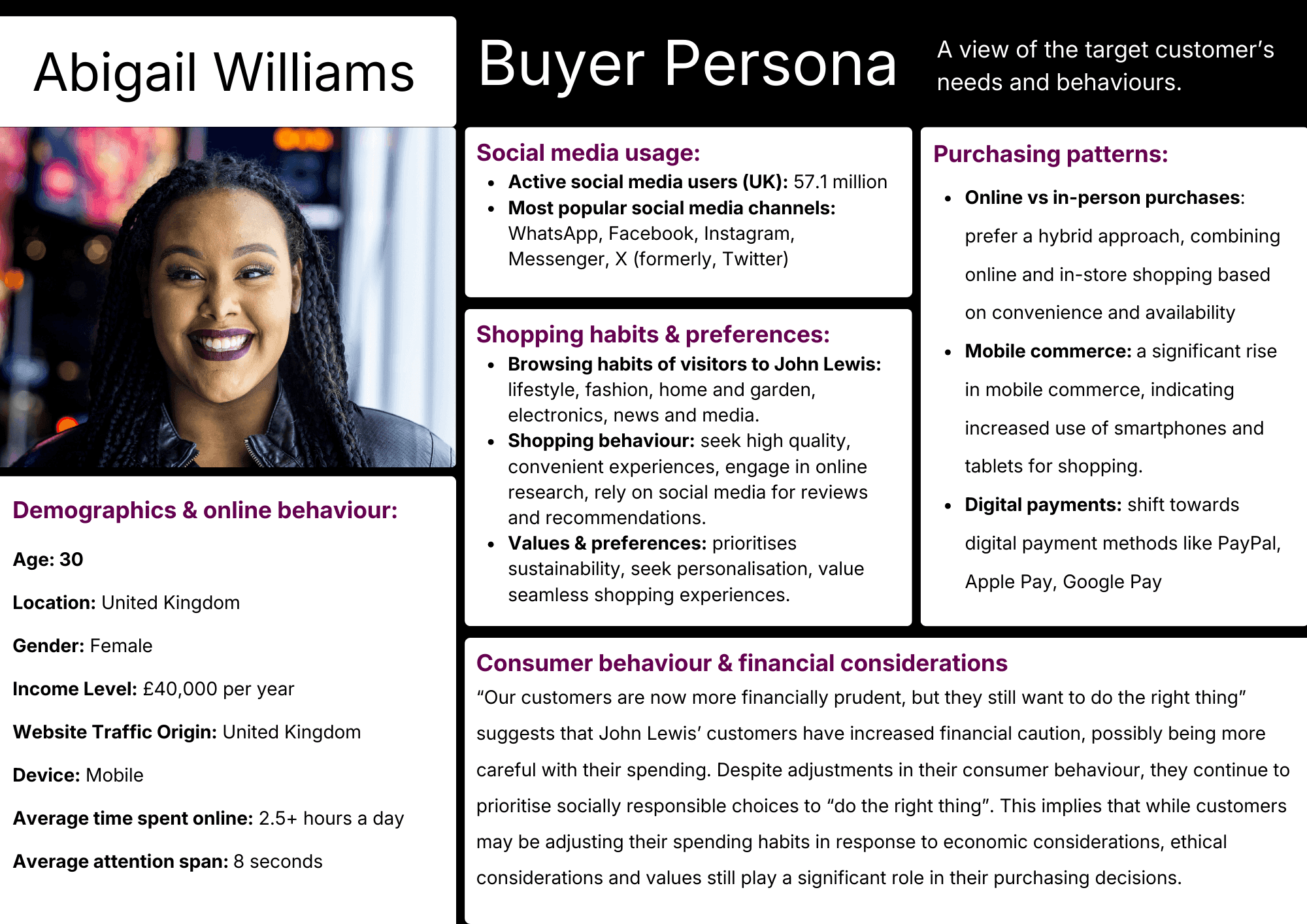
Defining these questions allowed me to evaluate their presence for their primary audience: Millennials and Gen Z (aged 25-34).
These shoppers are financially prudent yet socially conscious; they want to 'do the right thing' while navigating a cost-of-living crisis.
Like every project, this one required a direction.
I moved past surface observations to address the core of my research: critically examining the brand's current effectiveness while identifying how digital transformation can secure future success.
My mission was defined by these 3 questions:
How does John Lewis use multiple channels to attract and retain the modern, budget-conscious consumer?
In what ways can digital technology increase brand intimacy and long-term loyalty?
Is their current digital ecosystem supporting growth, or is it falling behind competitors?
Defining these questions allowed me to evaluate their presence for their primary audience: Millennials and Gen Z (aged 25-34).
These shoppers are financially prudent yet socially conscious; they want to 'do the right thing' while navigating a cost-of-living crisis.
The rise of digital channels has fundamentally changed how audiences discover, engage with, and evaluate cultural institutions.
Heritage Malta historically relied on physical presence and traditional communications to connect with its audience.
Pre-pandemic, there was limited dedicated digital expertise. The pandemic accelerated change, prompting the organisation to invest in digital marketing professionals and social media platforms, marking a new chapter in its engagement strategy.
This project explored a simple, yet critical question:
How have digital technologies transformed audience behaviour and institutional relevance for Heritage Malta?
To answer this, a mixed-methods approach combined surveys, interviews, and platform analysis.
The aim was not only to collect data, but to find patterns in how audiences interact with heritage digitally, and how these patterns inform strategic decisions about communication, engagement, and long-term relevance.
The approach.
The approach.
I chose a framework that would allow me to see the "big picture" of how a customer interacts with the brand, from seeing their famous Christmas ad to making repeated purchases on their website or mobile app.
Unlike the RACE model used in my other case study, ‘Building the Digital Roadmap’, which tracks the linear customer journey, the PESO model focuses on how different media types work in synergy.
This was the better fit in this case. You might ask, why is that?
It’s because it allowed me to analyse their online presence across the below 4 quadrants.
[PS: if you want the detailed breakdown of the PESO model applied to John Lewis, tap here]
I chose a framework that would allow me to see the "big picture" of how a customer interacts with the brand, from seeing their famous Christmas ad to making repeated purchases on their website or mobile app.
Unlike the RACE model used in my other case study, ‘Building the Digital Roadmap’, which tracks the linear customer journey, the PESO model focuses on how different media types work in synergy.
This was the better fit in this case. You might ask, why is that?
It’s because it allowed me to analyse their online presence across the below 4 quadrants.
[PS: if you want the detailed breakdown of the PESO model applied to John Lewis, tap here]
The rise of digital channels has fundamentally changed how audiences discover, engage with, and evaluate cultural institutions.
Heritage Malta historically relied on physical presence and traditional communications to connect with its audience.
Pre-pandemic, there was limited dedicated digital expertise. The pandemic accelerated change, prompting the organisation to invest in digital marketing professionals and social media platforms, marking a new chapter in its engagement strategy.
This project explored a simple, yet critical question:
How have digital technologies transformed audience behaviour and institutional relevance for Heritage Malta?
To answer this, a mixed-methods approach combined surveys, interviews, and platform analysis.
The aim was not only to collect data, but to find patterns in how audiences interact with heritage digitally, and how these patterns inform strategic decisions about communication, engagement, and long-term relevance.
| Paid Media
| Paid Media
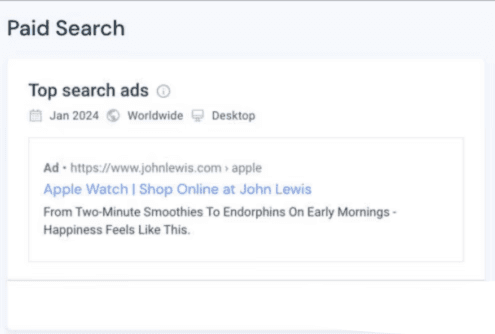
I examined how major investments, including television commercials (which is what John Lewis is mostly known for), social media ads, and Google ads, act as primary drivers for awareness.
Furthermore, partnerships with influencers have proven to be successful methods for attracting potential customers and boosting campaign reach.
I examined how major investments, including television commercials (which is what John Lewis is mostly known for), social media ads, and Google ads, act as primary drivers for awareness.
Furthermore, partnerships with influencers have proven to be successful methods for attracting potential customers and boosting campaign reach.
The rise of digital channels has fundamentally changed how audiences discover, engage with, and evaluate cultural institutions.
Heritage Malta historically relied on physical presence and traditional communications to connect with its audience.
Pre-pandemic, there was limited dedicated digital expertise. The pandemic accelerated change, prompting the organisation to invest in digital marketing professionals and social media platforms, marking a new chapter in its engagement strategy.
This project explored a simple, yet critical question:
How have digital technologies transformed audience behaviour and institutional relevance for Heritage Malta?
To answer this, a mixed-methods approach combined surveys, interviews, and platform analysis.
The aim was not only to collect data, but to find patterns in how audiences interact with heritage digitally, and how these patterns inform strategic decisions about communication, engagement, and long-term relevance.

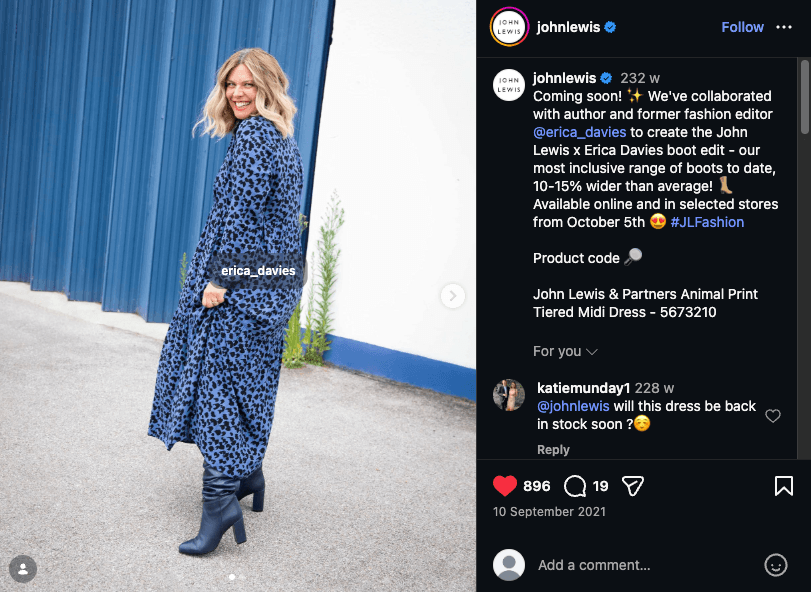
| Earned Media
I looked at how PR campaigns, press coverage,
and thought leadership improve brand visibility
and reputation through word-of-mouth marketing.
Notably, I found that John Lewis maintains a social media account dedicated solely to PR, allowing them to manage their reputation and media relations independently from their main consumer feed.
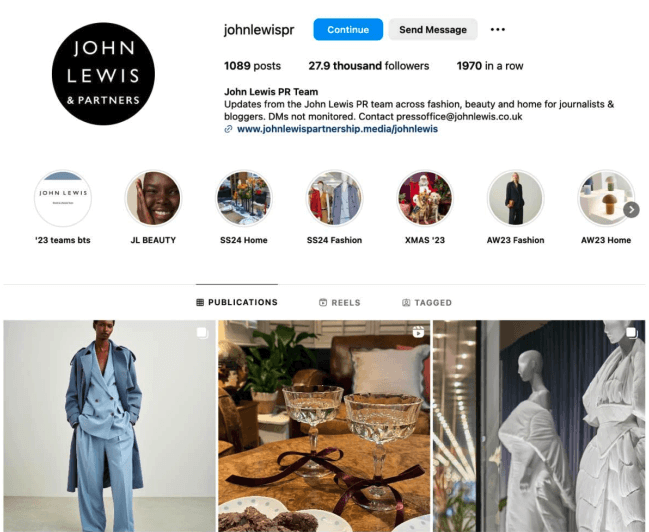
| Earned Media
I looked at how PR campaigns, press coverage, and thought leadership improve brand visibility and reputation through word-of-mouth marketing.
Notably, I found that John Lewis maintains a social media account dedicated solely to PR, allowing them to manage their reputation and media relations independently from their main consumer feed.
| Earned Media
I looked at how PR campaigns, press coverage, and thought leadership improve brand visibility and reputation through word-of-mouth marketing.
Notably, I found that John Lewis maintains a social media account dedicated solely to PR, allowing them to manage their reputation and media relations independently from their main consumer feed.
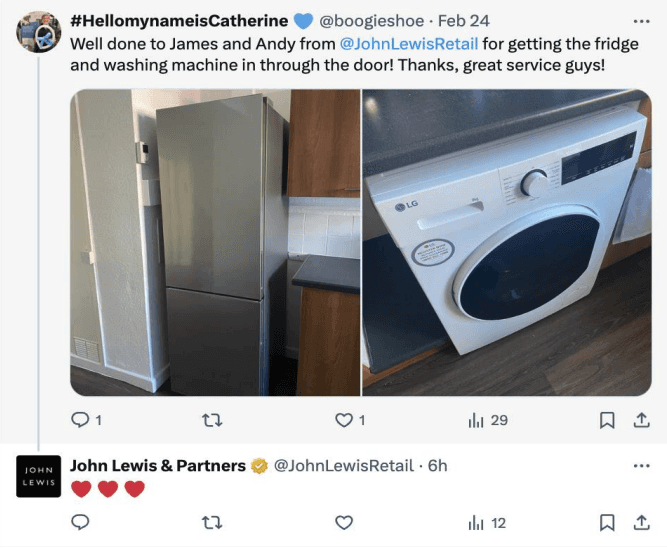
| Shared Media
I analysed how social media engagement, user-generated content, reviews, and retweets contribute to developing community interaction.
This quadrant is important for promoting brand advocacy, as it turns customers into vocal supporters. I also examined how they utilise platforms like X for dedicated customer service, ensuring that community interaction remains
a driver for positive brand perception.
| Shared Media
I analysed how social media engagement, user-generated content, reviews, and retweets contribute to developing community interaction.
This quadrant is important for promoting brand advocacy, as it turns customers into vocal supporters. I also examined how they utilise platforms like X for dedicated customer service, ensuring that community interaction remains
a driver for positive brand perception.
| Shared Media
I analysed how social media engagement, user-generated content, reviews, and retweets contribute to developing community interaction.
This quadrant is important for promoting brand advocacy, as it turns customers into vocal supporters. I also examined how they utilise platforms like X for dedicated customer service, ensuring that community interaction remains a driver for positive brand perception.
| Owned Media
I conducted a dive into the platforms the brand controls directly, such as the website, mobile app, and email marketing.
These channels are vital as they facilitate direct communication and customer interaction, allowing the brand to own the relationship without third-party interference.
Specifically, I looked at how the mobile app became a primary growth engine, seeing a massive 186% revenue increase between 2020 and 2022.

| Owned Media
I conducted a dive into the platforms the brand controls directly, such as the website, mobile app, and email marketing.
These channels are vital as they facilitate direct communication and customer interaction, allowing the brand to own the relationship without third-party interference.
Specifically, I looked at how the mobile app became a primary growth engine, seeing a massive 186% revenue increase between 2020 and 2022.
| Owned Media
I conducted a dive into the platforms the brand controls directly, such as the website, mobile app, and email marketing.
These channels are vital as they facilitate direct communication and customer interaction, allowing the brand to own the relationship without third-party interference.
Specifically, I looked at how the mobile app became a primary growth engine, seeing a massive 186% revenue increase between 2020 and 2022.
This breakdown was important for the next phase, where I dived into each specific channel to find what was really happening behind the scenes.
The realisation.
The realisation.
This is where I got under the hood of the brand’s digital machine.
By auditing each channel, I found the specific "friction points" where technical execution currently clashes with the human experience.
| The complexity gap
While the site uses React.js for speed, the desktop homepage is nearly double the length of M&S’s. This creates a disconnect between the web interface and the mobile app, which, driven by Deloitte Digital's 'mobile-first' strategy and biometric security, saw revenue skyrocket by 186%.
| The discovery barrier
John Lewis holds 2.3 million organic keywords, yet 94% of traffic originates from the UK. This heavy reliance on "branded" search suggests they are serving existing fans but losing the "discovery" battle to competitors capturing broader product terms.
| The shipping 'ceiling'
A key barrier to growth is that the brand has not offered international shipping since January 2021, which limits its ability to expand globally and compete with rivals that distribute internationally.
| Passive communication
While email deliverability is excellent, the tone remains traditional, noted by a 0.0% emoji rate in subject lines. In a digital space where loyalty requires active engagement, this passive style risks being drowned out by more proactive, modern competitor strategies.
This is where I got under the hood of the brand’s digital machine.
By auditing each channel, I found the specific "friction points" where technical execution currently clashes with the human experience.
| The complexity gap
While the site uses React.js for speed, the desktop homepage is nearly double the length of M&S’s. This creates a disconnect between the web interface and the mobile app, which, driven by Deloitte Digital's 'mobile-first' strategy and biometric security, saw revenue skyrocket by 186%.
| The discovery barrier
John Lewis holds 2.3 million organic keywords, yet 94% of traffic originates from the UK. This heavy reliance on "branded" search suggests they are serving existing fans but losing the "discovery" battle to competitors capturing broader product terms.
| The shipping 'ceiling'
A key barrier to growth is that the brand has not offered international shipping since January 2021, which limits its ability to expand globally and compete with rivals that distribute internationally.
| Passive communication
While email deliverability is excellent, the tone remains traditional, noted by a 0.0% emoji rate in subject lines. In a digital space where loyalty requires active engagement, this passive style risks being drowned out by more proactive, modern competitor strategies.
The brand's biggest challenge wasn't the tech itself, but how it is used to reduce friction. I found that technical excellence is secondary to the user's need for simplicity and a "mobile-first" mindset.
The strategy & roadmap.
The strategy & roadmap.
Identifying the problems was only the first step.
I developed an operational plan to help John Lewis navigate these challenges and secure its position as a digital leader.
The roadmap focuses on long-term digital transformation, removing growth barriers, and building deeper brand intimacy through emerging technology.
This research serves as a blueprint for how a legacy brand can leverage its existing trust to lead in a digital-first market.
Identifying the problems was only the first step.
I developed an operational plan to help John Lewis navigate these challenges and secure its position as a digital leader.
The roadmap focuses on long-term digital transformation, removing growth barriers, and building deeper brand intimacy through emerging technology.
This research serves as a blueprint for how a legacy brand can leverage its existing trust to lead in a digital-first market.