Redefining heritage
in a digital world.
Redefining heritage
in a digital world.
Redefining heritage
in a digital world.
How digital technologies reshaped audience
behaviour, institutional relevance, & engagement.
Industry: Tourism & Culture
Year: 2023
Brand: Heritage Malta
↓
Industry: Tourism
Industry: Tourism
Year: 2023
Brand: Heritage Malta
Brand: Heritage Malta
Industry: Tourism & Culture
↓
The story.
The story.
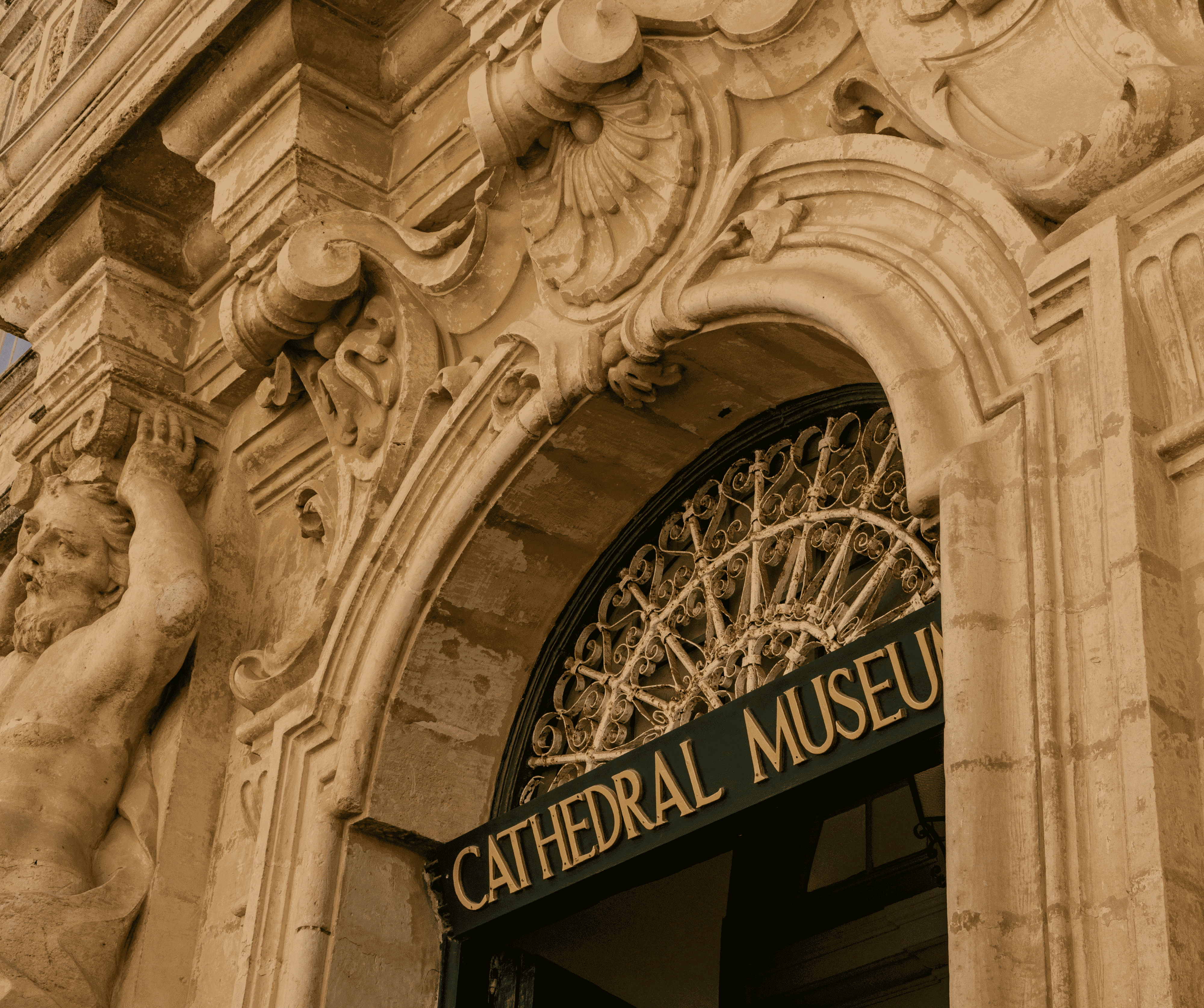
The rise of digital channels has fundamentally changed how audiences discover, engage with, and evaluate cultural institutions.
Heritage Malta historically relied on physical presence and traditional communications to connect with its audience.
Pre-pandemic, there was limited dedicated digital expertise.
The pandemic accelerated change, prompting the organisation to invest in digital marketing professionals and social media platforms, marking a new chapter in its engagement strategy.
The rise of digital channels has fundamentally changed how audiences discover, engage with, and evaluate cultural institutions.
Heritage Malta historically relied on physical presence and traditional communications to connect with its audience.
Pre-pandemic, there was limited dedicated digital expertise.
The pandemic accelerated change, prompting the organisation to invest in digital marketing professionals and social media platforms, marking a new chapter in its engagement strategy.
The question.
The question.
With this project, I wanted to explore a simple, yet critical question.
To answer this, a mixed-methods approach combined surveys, interviews, and platform analysis.
The aim was not only to collect data, but to uncover patterns in how audiences interact with heritage digitally, and how these patterns inform strategic decisions about communication, engagement, and long-term relevance.
The question I wanted to answer was:
With this project, I wanted to explore a simple, yet critical question.
How have digital technologies transformed audience behaviour and institutional relevance for Heritage Malta?
To answer this, a mixed-methods approach combined surveys, interviews, and platform analysis.
The aim was not only to collect data, but to uncover patterns in how audiences interact with heritage digitally, and how these patterns inform strategic decisions about communication, engagement, and long-term relevance.
The question I wanted to answer was:
With this project, I wanted to explore a simple, yet critical question.
To answer this, a mixed-methods approach combined surveys, interviews, and platform analysis.
The aim was not only to collect data, but to uncover patterns in how audiences interact with heritage digitally, and how these patterns inform strategic decisions about communication, engagement, and long-term relevance.
The question I wanted to answer was:
How have digital technologies transformed audience behaviour and institutional relevance for Heritage Malta?
The audience.
The audience.
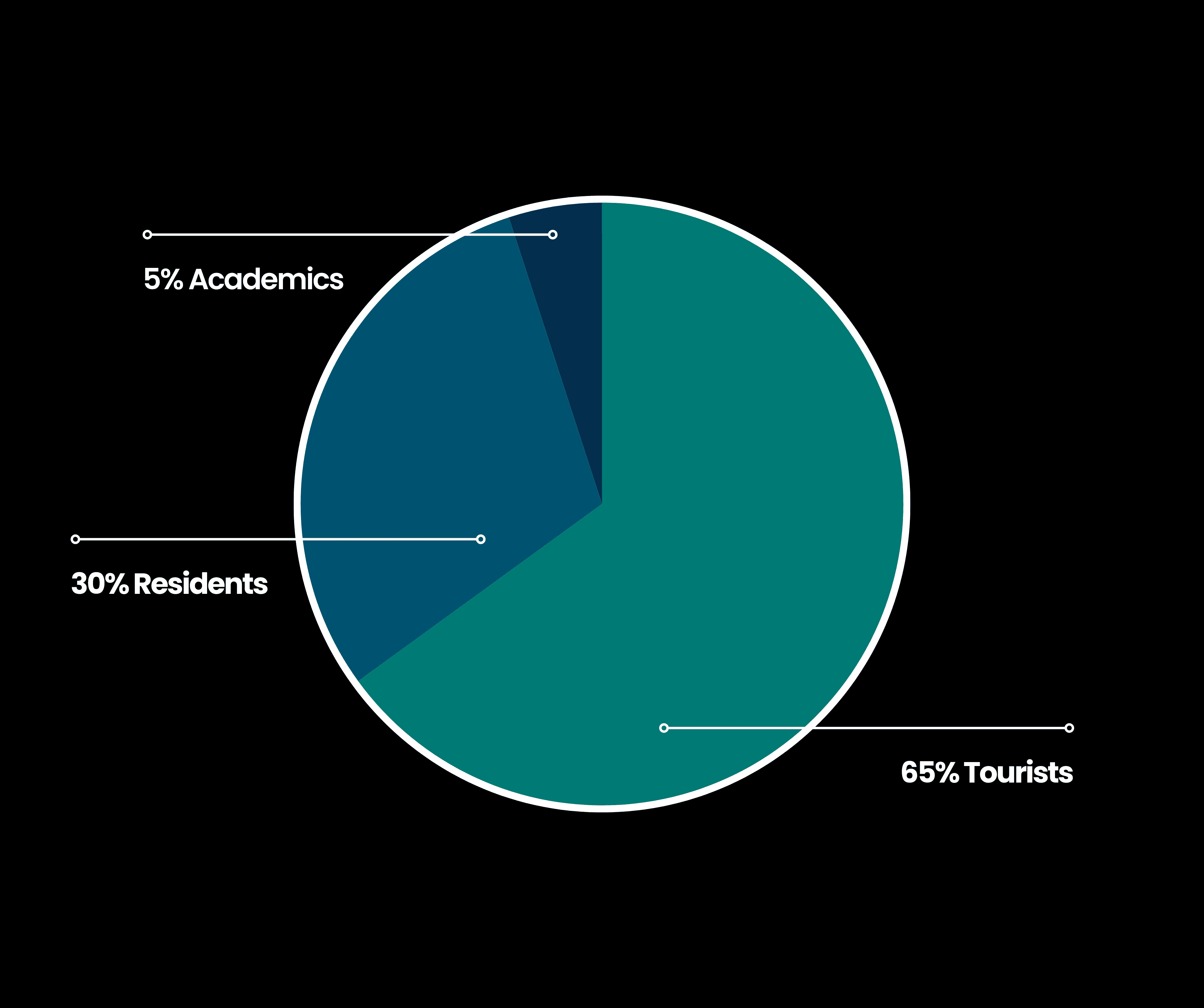
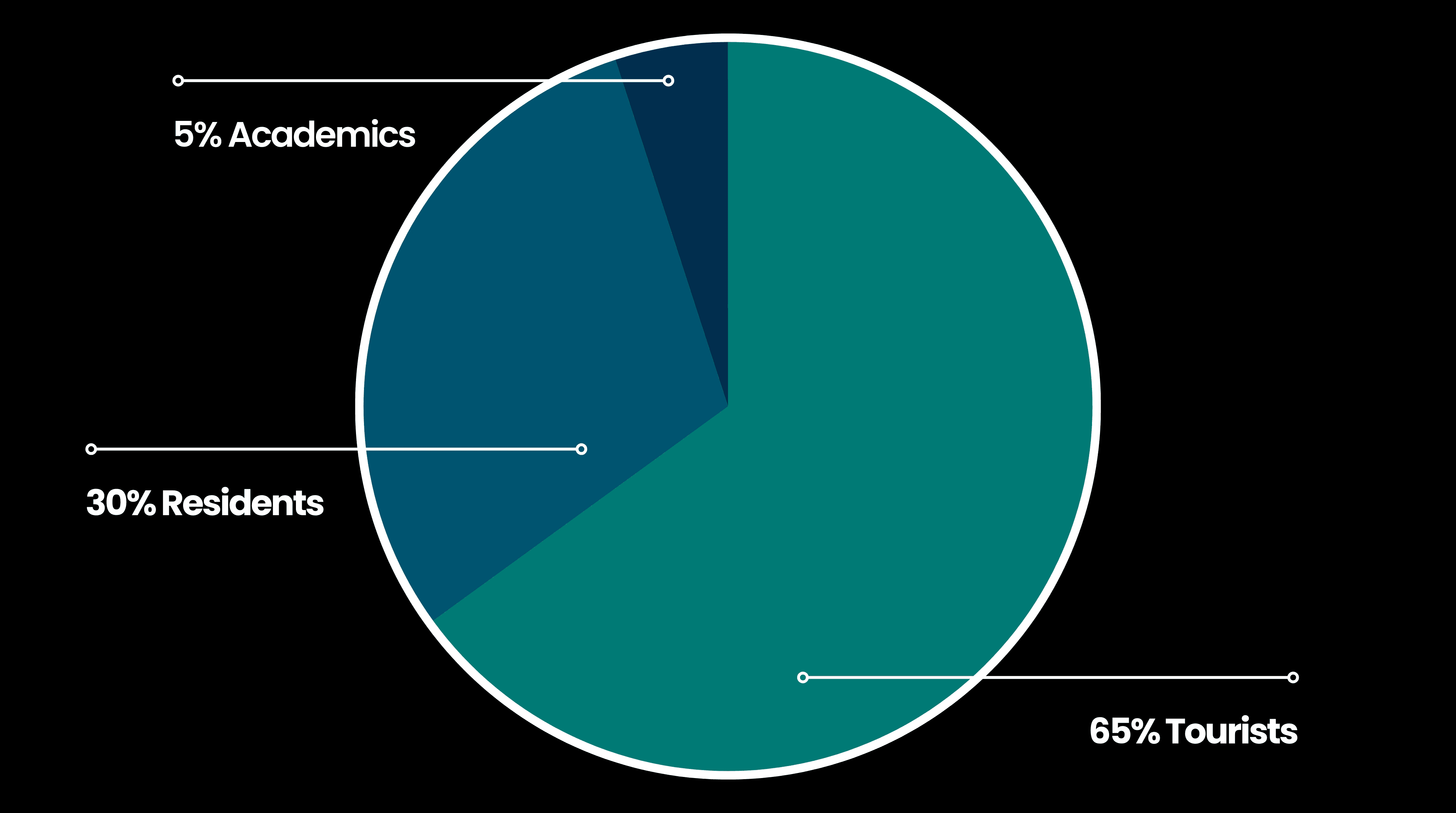
Heritage Malta serves many types of people.
From curious tourists to local residents and academics, each audience interacts with heritage in their own way.
I wanted to understand how these groups engage digitally and what they expect from a cultural institution online.
I dug into surveys, interviews, and platform data to bring the audience to life.
Heritage Malta serves many types of people.
From curious tourists to local residents and academics, each audience interacts with heritage in their own way.
I wanted to understand how these groups engage digitally and what they expect from a cultural institution online.
I dug into surveys, interviews, and platform data to bring the audience to life.
Persona 1
Tourists
Tourists
Persona 1
Tourists
Persona 2
Residents
Residents
Persona 2
Residents
Persona 3
Academics
Academics
Persona 3
Academics
| Tourists
| Tourists
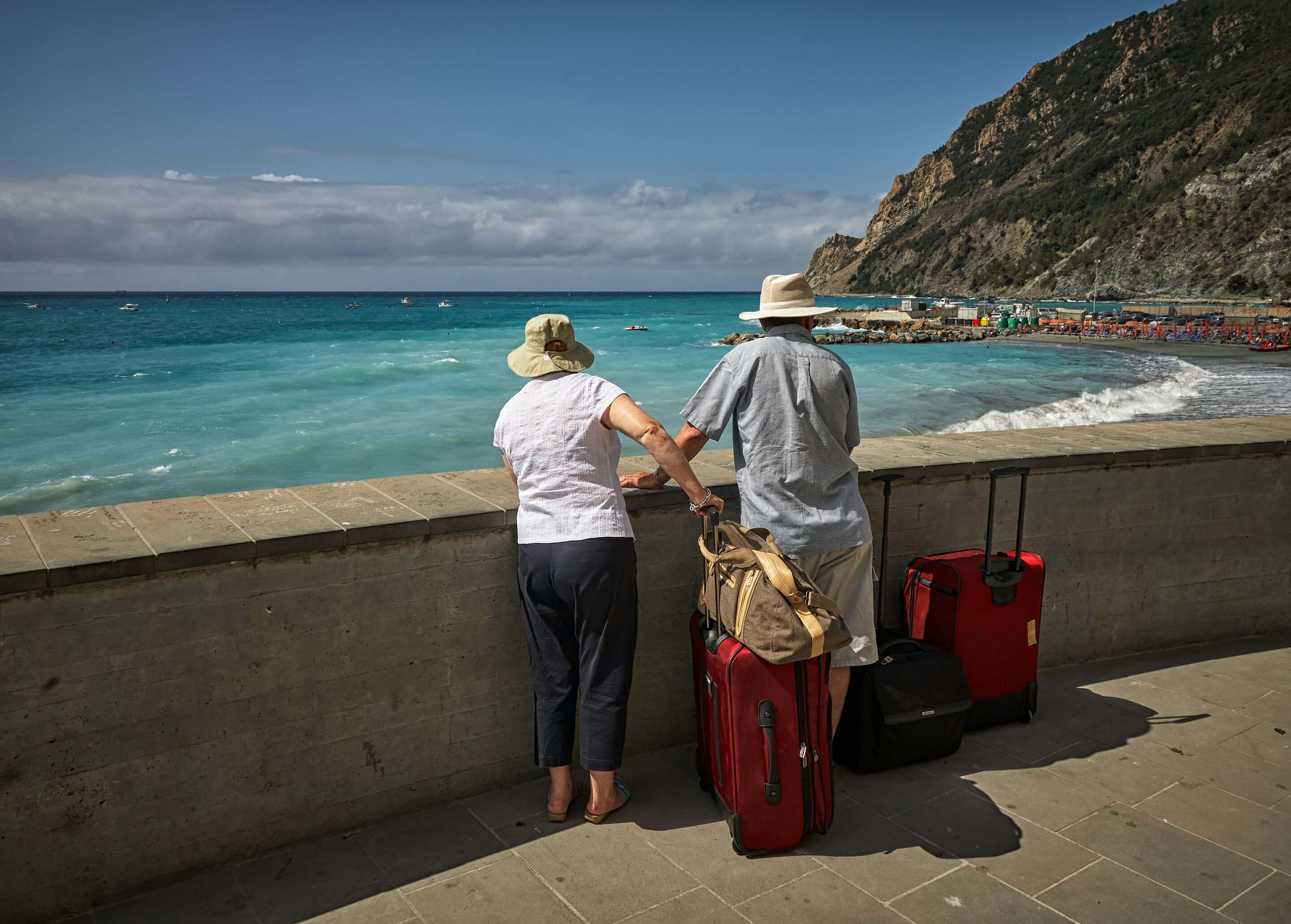
Tourists are explorers.
They start their journey online, scrolling through social media, reading about exhibitions, and planning visits. After the pandemic, they returned with renewed curiosity and enthusiasm. Survey responses showed that clear information and inspiring visuals guide their decisions. Digital channels are not just information sources.
They are the first step in an experience that begins online and continues on the island.
Tourists are explorers.
They start their journey online, scrolling through social media, reading about exhibitions, and planning visits. After the pandemic, they returned with renewed curiosity and enthusiasm. Survey responses showed that clear information and inspiring visuals guide their decisions. Digital channels are not just information sources.
They are the first step in an experience that begins online and continues on the island.
| Residents
| Residents
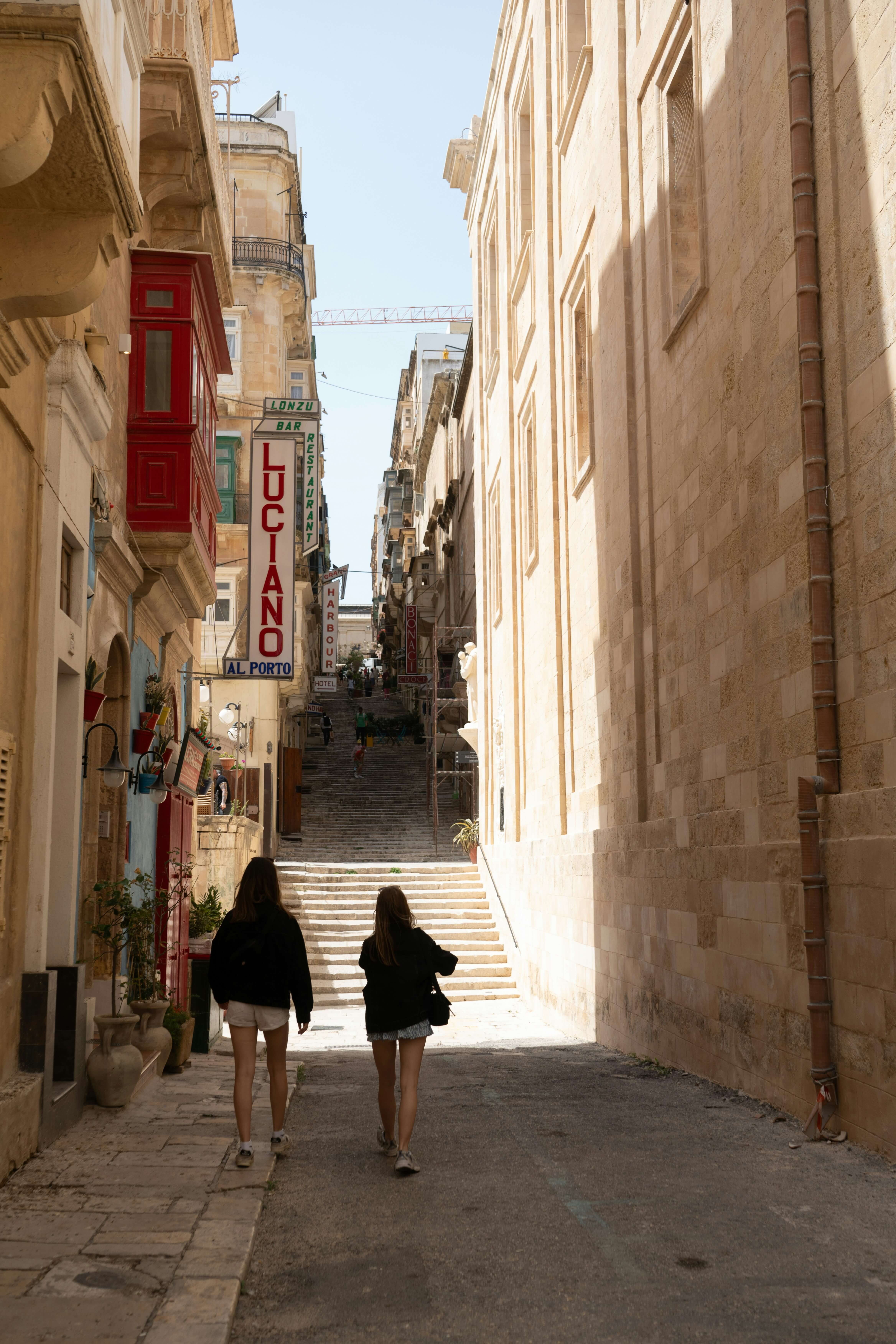
Residents are connected to their history.
They want to learn about Malta’s past and feel a sense of pride. My research showed that online content can spark curiosity in ways that physical visits cannot always achieve. Social media posts, emails, and updates introduce new workshops, exhibitions, and events.
For residents, digital channels turn everyday life into an opportunity to engage with culture.
Residents are connected to their history.
They want to learn about Malta’s past and feel a sense of pride. My research showed that online content can spark curiosity in ways that physical visits cannot always achieve. Social media posts, emails, and updates introduce new workshops, exhibitions, and events.
For residents, digital channels turn everyday life into an opportunity to engage with culture.
| Academics
| Academics
Academics are deep divers.
They come with questions, research projects, and a need for access to archives and historical resources. In interviews, I learned that accessibility and detail matter most to this group. Digital tools allow them to explore collections remotely, plan research, and connect with Heritage Malta from anywhere. The institution becomes more than a destination.
It becomes a partner in research and learning.
Academics are deep divers.
They come with questions, research projects, and a need for access to archives and historical resources. In interviews, I learned that accessibility and detail matter most to this group. Digital tools allow them to explore collections remotely, plan research, and connect with Heritage Malta from anywhere. The institution becomes more than a destination.
It becomes a partner in research and learning.
Defining these 3 personas gave me a clear picture of how audiences behave online. It revealed their motivations, habits, and expectations. Understanding them was the first step in mapping the
impact of digital channels.
Defining these three personas gave me a clear picture of how audiences behave online. It revealed their motivations, habits, and expectations. Understanding them was the first step in mapping the impact of digital channels.
How digital channels shape engagement.
How digital channels shape engagement.
I wanted to understand how Heritage Malta’s audiences experience culture online.
The survey made one thing clear: social media dominates. Facebook is used by 72% of respondents, Instagram by 61%, and emails are a close second at 50%. Familiarity with Heritage Malta’s digital channels was also high, with 62% of participants engaging regularly.
Each platform influences a different audience and offers unique ways to connect.
I wanted to understand how Heritage Malta’s audiences experience culture online.
The survey made one thing clear: social media dominates. Facebook is used by 72% of respondents, Instagram by 61%, and emails are a close second at 50%. Familiarity with Heritage Malta’s digital channels was also high, with 62% of participants engaging regularly.
Each platform influences a different audience and offers unique ways to connect.



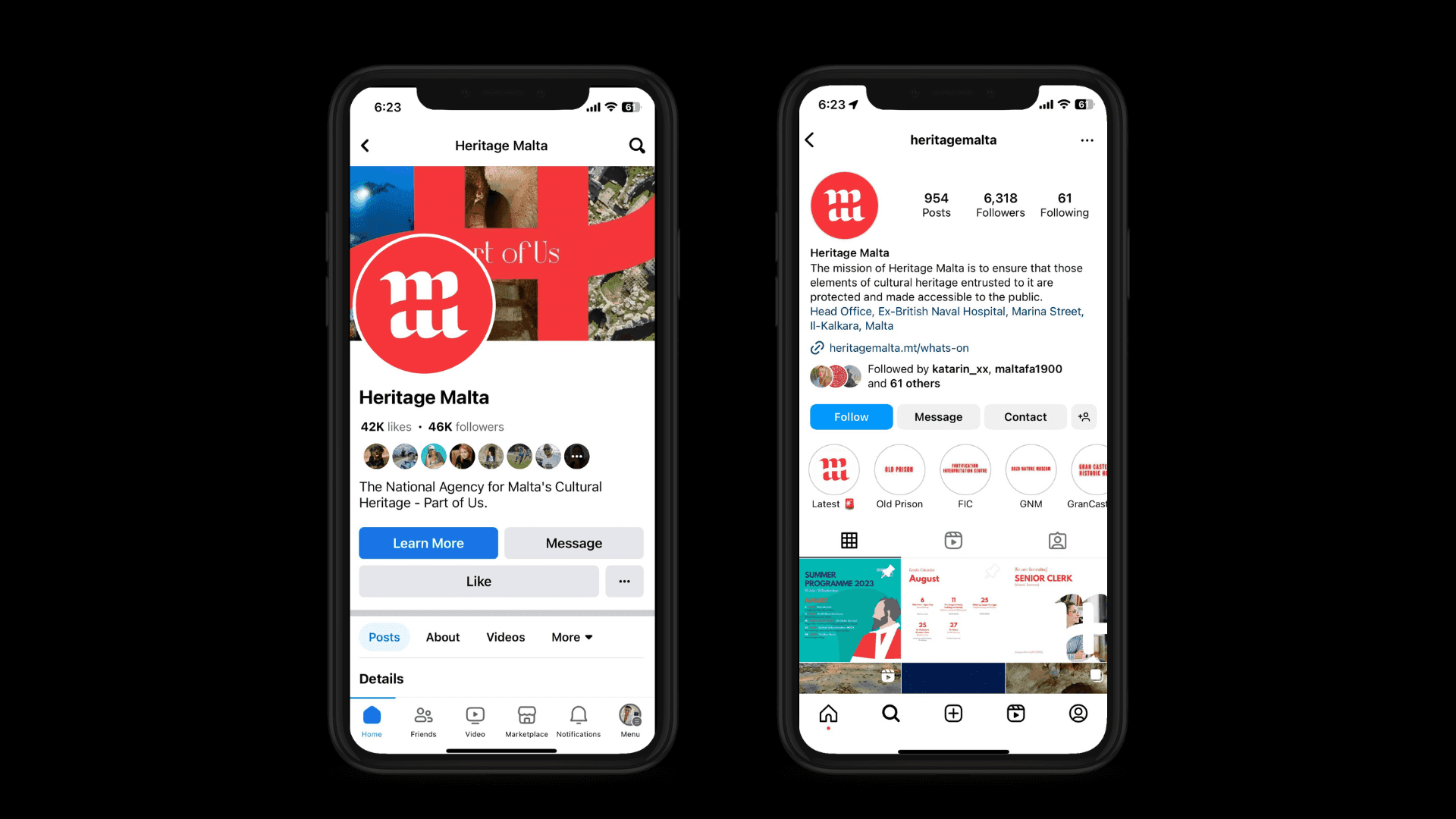
Facebook is where communities gather, especially in Malta.
Over the years, the platform has added features like WhatsApp integration, Stories, Reels, and Facebook Groups. I noticed that these features help Heritage Malta reach audiences in ways that feel personal and interactive.
Stories and Reels allow visitors to see exhibitions, events, and behind-the-scenes content. People share these posts with friends, which naturally extends Heritage Malta’s reach. Groups create a space for discussions, feedback, and social listening, helping me understand what the audience cares about.
WhatsApp, while a popular tool for tourists and locals to ask questions about events and museums, was not being used by Heritage Malta at this point. Facebook Shops is also still untapped, which could open opportunities in the future.
Facebook is where communities gather, especially in Malta.
Over the years, the platform has added features like WhatsApp integration, Stories, Reels, and Facebook Groups. I noticed that these features help Heritage Malta reach audiences in ways that feel personal and interactive.
Stories and Reels allow visitors to see exhibitions, events, and behind-the-scenes content. People share these posts with friends, which naturally extends Heritage Malta’s reach. Groups create a space for discussions, feedback, and social listening, helping me understand what the audience cares about.
WhatsApp, while a popular tool for tourists and locals to ask questions about events and museums, was not being used by Heritage Malta at this point. Facebook Shops is also still untapped, which could open opportunities in the future.
Instagram feels alive.
I tracked how its features evolved, from Stories and Carousels to Reels and sponsored posts. Each feature offers a new way to engage.
Sponsored posts help target audiences based on interest and location, increasing awareness and driving traffic. Carousels allow me to show multiple aspects of exhibitions in one post. Reels are essential for younger audiences, and HM TV has become a way to showcase research and behind-the-scenes moments in a concise, engaging format.
Translation features make international outreach seamless, connecting Heritage Malta with audiences across the globe.
Instagram feels alive.
I tracked how its features evolved, from Stories and Carousels to Reels and sponsored posts. Each feature offers a new way to engage.
Sponsored posts help target audiences based on interest and location, increasing awareness and driving traffic. Carousels allow me to show multiple aspects of exhibitions in one post. Reels are essential for younger audiences, and HM TV has become a way to showcase research and behind-the-scenes moments in a concise, engaging format.
Translation features make international outreach seamless, connecting Heritage Malta with audiences across the globe.
| Email Marketing
| Email Marketing
Email remains a key channel, especially for residents and academics.
It allows direct communication, delivering information, memberships, tickets, and personalised offers straight to inboxes. Open rates and click-throughs show that audiences value timely, relevant content. Email campaigns provide data that help me fine-tune messaging, schedule communications, and understand preferences.
Personalisation is important. Members receive updates about exclusive tours, events, and conservation work, while subscribers stay informed about exhibitions and workshops.
Each email becomes a touchpoint, reinforcing engagement and loyalty.
Email remains a key channel, especially for residents and academics.
It allows direct communication, delivering information, memberships, tickets, and personalised offers straight to inboxes. Open rates and click-throughs show that audiences value timely, relevant content. Email campaigns provide data that help me fine-tune messaging, schedule communications, and understand preferences.
Personalisation is important. Members receive updates about exclusive tours, events, and conservation work, while subscribers stay informed about exhibitions and workshops.
Each email becomes a touchpoint, reinforcing engagement and loyalty.
| Website
| Website
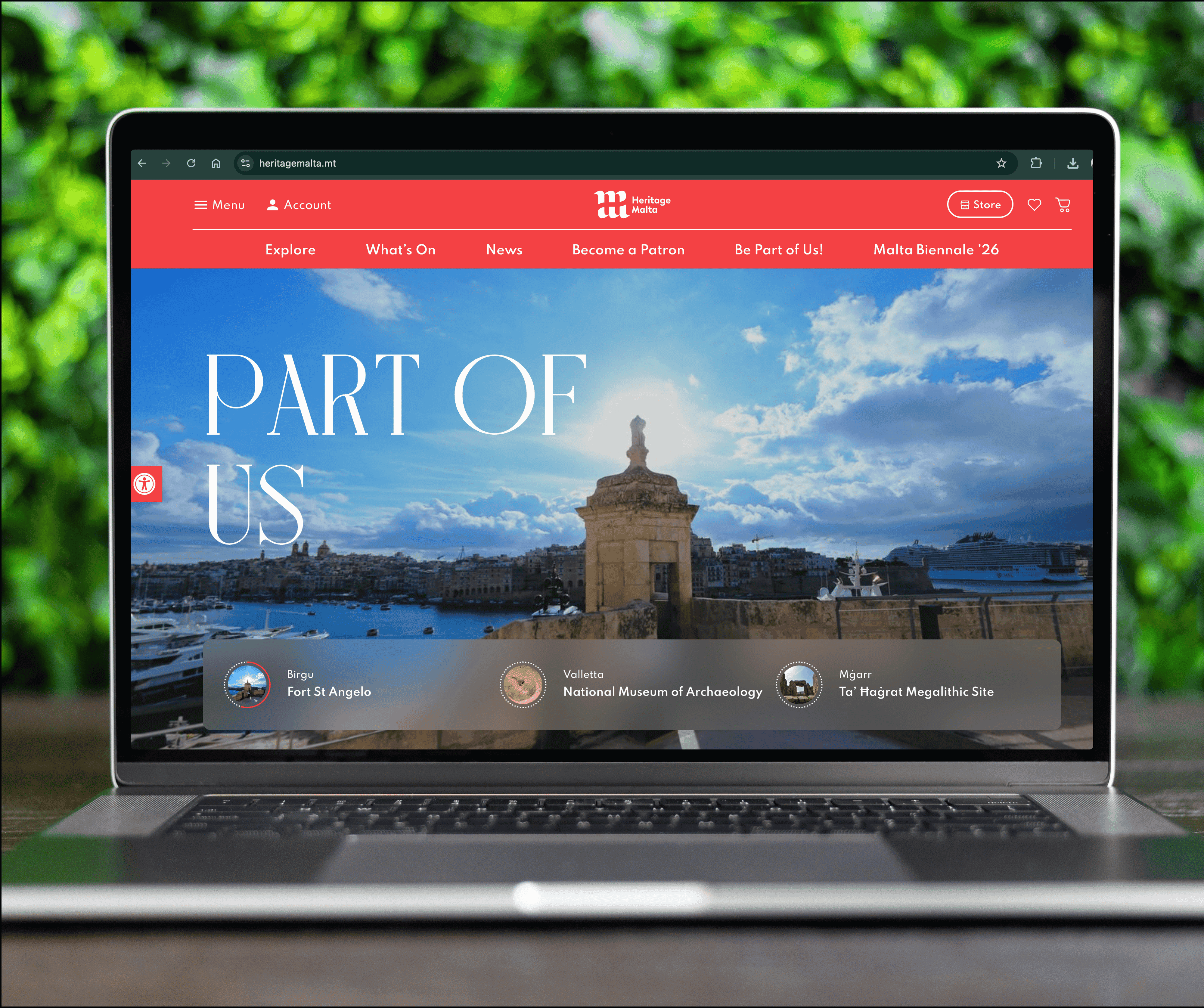
The website is the backbone.
Tourists, residents, and academics use it differently. Tourists want booking information, directions, and virtual tours. Residents look for event schedules and learning opportunities. Academics need access to archives and press resources.
The website’s evolution, from basic HTML pages to responsive design and progressive web apps, allows audiences to interact seamlessly on any device. Features like virtual tours and improved online shopping experiences meet the expectations of digital-first visitors and support long-term engagement.
The website is the backbone.
Tourists, residents, and academics use it differently. Tourists want booking information, directions, and virtual tours. Residents look for event schedules and learning opportunities. Academics need access to archives and press resources.
The website’s evolution, from basic HTML pages to responsive design and progressive web apps, allows audiences to interact seamlessly on any device. Features like virtual tours and improved online shopping experiences meet the expectations of digital-first visitors and support long-term engagement.
Lessons from global & local examples.
Lessons from global & local examples.
I looked beyond Malta to see how other cultural institutions use these tools.
On Facebook, the Victoria & Albert Museum increased engagement locally through groups and live streams. The Smithsonian National Museum of Natural History reached global audiences with virtual tours and events.
On Instagram, the British Museum connected with local visitors and artists, while the Louvre used reels and AR filters to engage international audiences.
Email marketing shows similar patterns. The Tate Museum uses segmentation and personalised campaigns to boost attendance and revenue locally, while the National Theatre in the UK engages audiences worldwide.
The website is no different.
The National Museum of African American History & Culture combines online resources, ticketing, and community engagement. The Louvre offers virtual exhibitions to global audiences, reaching millions who cannot visit in person.
Across all platforms, digital technologies transform how audiences interact with culture, how museums communicate, and how institutions remain relevant.
I looked beyond Malta to see how other cultural institutions use these tools.
On Facebook, the Victoria & Albert Museum increased engagement locally through groups and live streams. The Smithsonian National Museum of Natural History reached global audiences with virtual tours and events.
On Instagram, the British Museum connected with local visitors and artists, while the Louvre used reels and AR filters to engage international audiences.
Email marketing shows similar patterns. The Tate Museum uses segmentation and personalised campaigns to boost attendance and revenue locally, while the National Theatre in the UK engages audiences worldwide.
The website is no different.
The National Museum of African American History & Culture combines online resources, ticketing, and community engagement. The Louvre offers virtual exhibitions to global audiences, reaching millions who cannot visit in person.
Across all platforms, digital technologies transform how audiences interact with culture, how museums communicate, and how institutions remain relevant.
What this means for the industry.
What this means for the industry.
Digital technologies are changing how heritage is experienced, shared, and preserved.
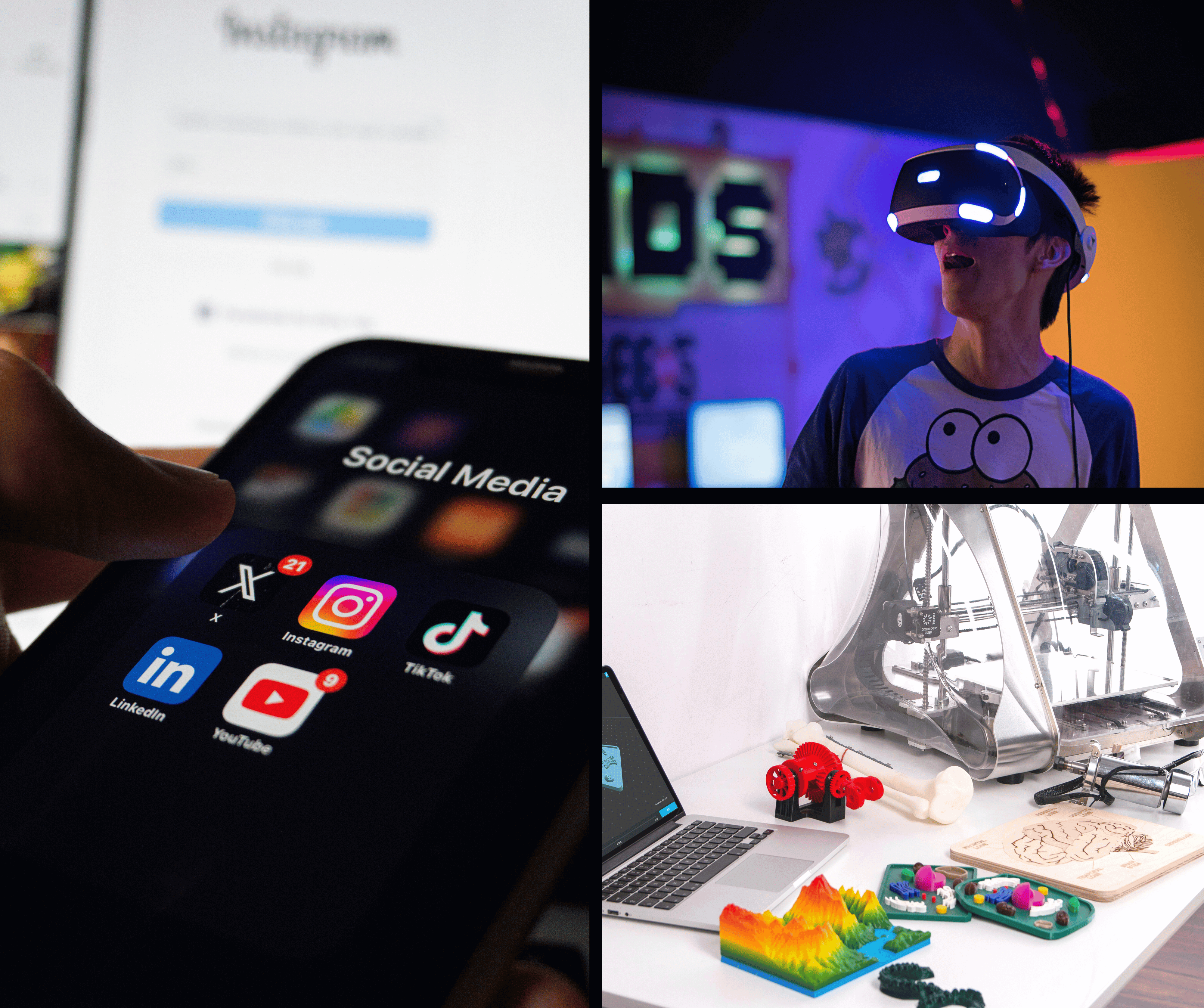
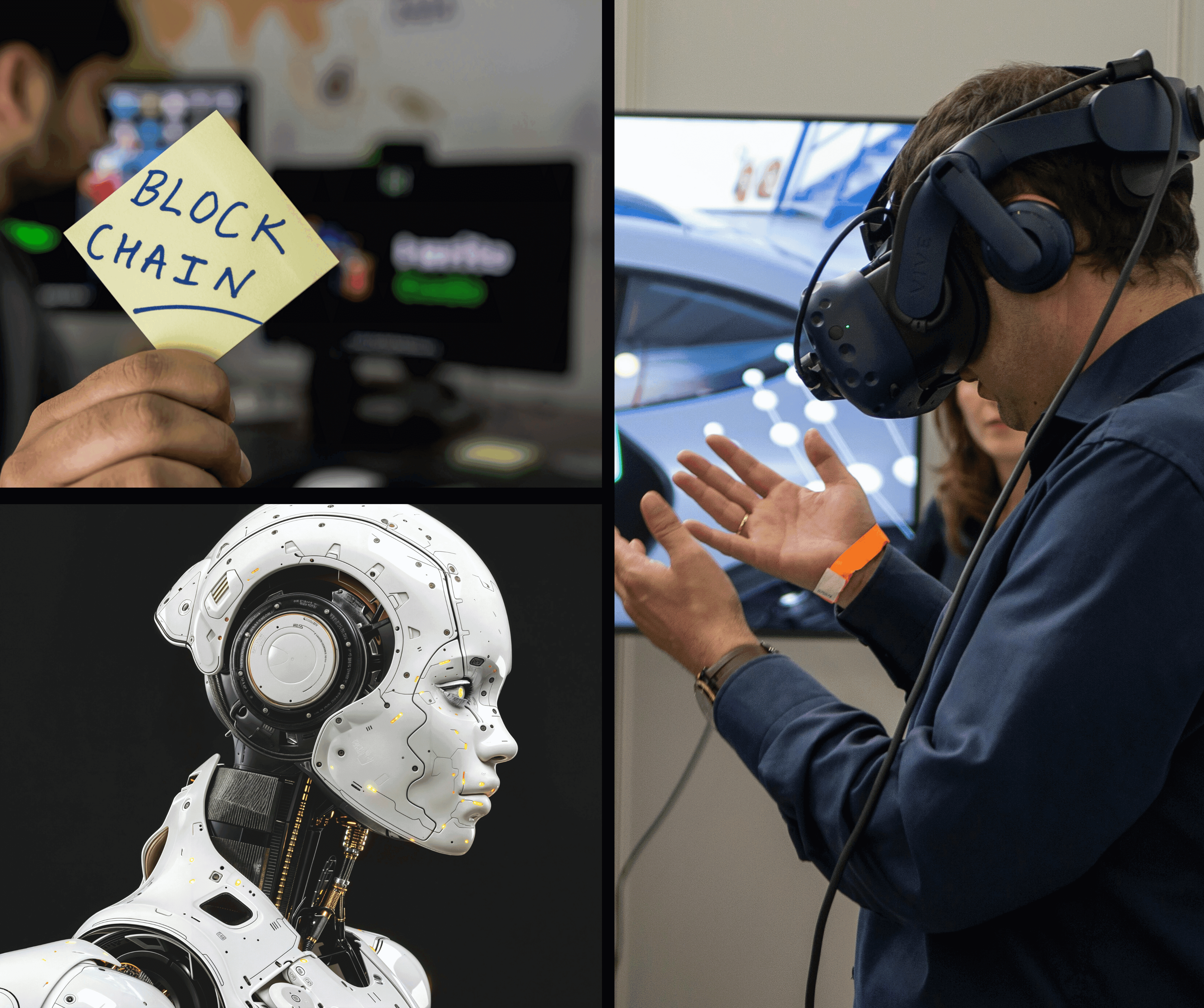
Museums and cultural institutions now need to think beyond physical walls. Audiences expect immersive experiences, personalised interactions, and instant access to information. Institutions that embrace VR, AR, AI, blockchain, and 3D printing can offer more engaging experiences, expand global reach, and strengthen community connections.
At the same time, these technologies bring challenges. Investments in infrastructure and training are needed, and ethical questions around data use, digital replicas, and cultural ownership cannot be ignored.
The cultural sector must balance innovation with authenticity, ensuring that digital solutions complement, rather than replace, the value of in-person experiences.
Digital technologies are changing how heritage is experienced, shared, and preserved.
Museums and cultural institutions now need to think beyond physical walls. Audiences expect immersive experiences, personalised interactions, and instant access to information. Institutions that embrace VR, AR, AI, blockchain, and 3D printing can offer more engaging experiences, expand global reach, and strengthen community connections.
At the same time, these technologies bring challenges. Investments in infrastructure and training are needed, and ethical questions around data use, digital replicas, and cultural ownership cannot be ignored.
The cultural sector must balance innovation with authenticity, ensuring that digital solutions complement, rather than replace, the value of in-person experiences.
The next steps for digital heritage.
The next steps for digital heritage.
Heritage Malta can build on current digital foundations to future-proof engagement and preservation.
First, immersive technologies like VR and AR should be tested in key exhibitions to create memorable, interactive experiences for both locals and tourists. AI-powered chatbots and analytics can be used to personalise visitor interactions and better understand audience behaviour.
Blockchain can be explored for secure provenance tracking, ensuring artefacts’ histories are transparent and tamper-proof. 3D printing offers the chance to produce replicas for education and outreach, expanding access without compromising originals.
Finally, all digital efforts, social media, email marketing, website, and virtual tours, should work together as an integrated ecosystem, providing seamless, user-friendly experiences.
Continuous monitoring, feedback, and staff training will ensure technologies are used effectively while keeping Malta’s cultural heritage authentic, accessible, and engaging.
Heritage Malta can build on current digital foundations to future-proof engagement and preservation.
First, immersive technologies like VR and AR should be tested in key exhibitions to create memorable, interactive experiences for both locals and tourists. AI-powered chatbots and analytics can be used to personalise visitor interactions and better understand audience behaviour.
Blockchain can be explored for secure provenance tracking, ensuring artefacts’ histories are transparent and tamper-proof. 3D printing offers the chance to produce replicas for education and outreach, expanding access without compromising originals.
Finally, all digital efforts, social media, email marketing, website, and virtual tours, should work together as an integrated ecosystem, providing seamless, user-friendly experiences.
Continuous monitoring, feedback, and staff training will ensure technologies are used effectively while keeping Malta’s cultural heritage authentic, accessible, and engaging.
What this reveals.
What this reveals.
Digital tools are changing how people interact with museums and heritage sites.
Social media, email, and websites let audiences learn, explore, and connect in new ways.
New technologies like VR, AI, blockchain, and 3D printing can improve visitor experiences, make heritage more accessible, and protect artefacts.
Heritage Malta can use these tools to reach more people, provide better experiences, and stay relevant while keeping Malta’s history and culture at the centre.
The rise of digital channels has fundamentally changed how audiences discover, engage with, and evaluate cultural institutions.
Heritage Malta historically relied on physical presence and traditional communications to connect with its audience.
Pre-pandemic, there was limited dedicated digital expertise. The pandemic accelerated change, prompting the organisation to invest in digital marketing professionals and social media platforms, marking a new chapter in its engagement strategy.
This project explored a simple, yet critical question:
How have digital technologies transformed audience behaviour and institutional relevance for Heritage Malta?
To answer this, a mixed-methods approach combined surveys, interviews, and platform analysis.
The aim was not only to collect data, but to find patterns in how audiences interact with heritage digitally, and how these patterns inform strategic decisions about communication, engagement, and long-term relevance.
Digital tools are changing how people interact with museums and heritage sites.
Social media, email, and websites let audiences learn, explore, and connect in new ways.
New technologies like VR, AI, blockchain, and 3D printing can improve visitor experiences, make heritage more accessible, and protect artefacts.
Heritage Malta can use these tools to reach more people, provide better experiences, and stay relevant while keeping Malta’s history and culture at the centre.